Vratsa Province: Rock Walls and the Vratsa Balkan
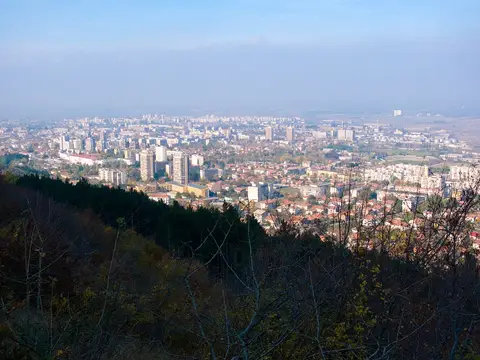
Travel guide · editorialRight behind the concrete apartment blocks of Vratsa, 400-meter limestone walls rise up – climbers from all over Europe know the Vratsata wall. A trip to Vratsa combines this mountain backdrop with one of Bulgaria's most beautiful stalactite caves and with the Danube at Kozloduy.
Vratsa and the Vratsa Balkan
The provincial capital lies at the foot of the Vratsa Balkan, a limestone massif of caves, gorges, and waterfalls that is protected as a nature park. A road winds up through the Vratsata gorge to the Ledenika Cave, whose large hall of stalactites is also used for concerts. Below it lies the Skaklya waterfall, which is at its strongest in spring. The regional museum displays the Rogozen Treasure, more than 160 Thracian silver vessels discovered by a farmer in his garden in 1985. In the old town stands the 17th-century Meshdiyski tower.
From the Mountains to the Danube
North of the mountains, the flat Danube plain opens up, with wheat fields and villages. Kozloduy on the Danube is home to Bulgaria's only nuclear power plant; it is also where the poet Hristo Botev landed in 1876 with his band of fighters after they had hijacked a Danube steamer. A replica of the steamer Radetzky now lies on the shore as a museum ship. Botev fell a few days later in the Balkan mountains above Vratsa, where a commemorative march takes place every year on June 2. The province also has small places such as Mezdra, a railway junction on the Iskar Gorge with cliffs and a medieval fortress, and the Cherepish Monastery, set in the rock above the river. The wine-growing area around Byala Slatina produces red wine with a good reputation in Bulgaria.
Food, Getting There, and Best Time to Visit
The cuisine is rustic, with bean soup, kebapcheta, yogurt, and Gamza red wine. Vratsa can be reached from Sofia in about two hours by train or car. The best time to visit is May to October, and for climbers especially spring and fall. In high summer, the shady gorges of the Vratsa Balkan are a pleasant retreat when the Danube plain turns oppressively hot.