Upper Austria: The Danube, Salzkammergut and Linz
Travel guide · editorialUpper Austria stretches from the Bohemian Forest across the Danube Valley to the peaks of the Dachstein. A vacation in Upper Austria takes you to the lake country of the Salzkammergut with Hallstatt and St. Wolfgang, to the industrial and cultural city of Linz, and onto cycling routes along the Danube.
Landscapes Between the Bohemian Forest and the Dachstein
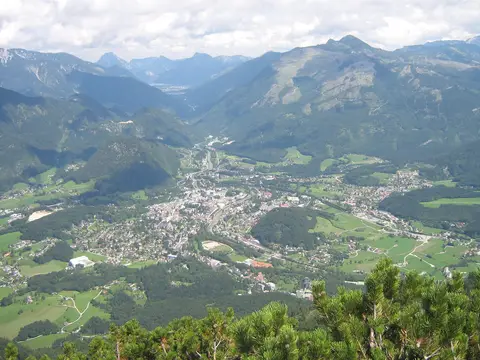
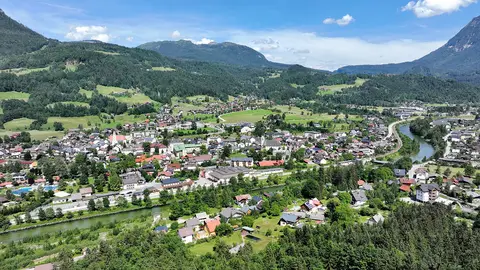
North of the Danube lies the Mühlviertel, a granite upland of forests, granite boulders and villages bordering Bavaria and the Czech Republic. The Danube winds through the region, forming a famous loop at Schlögen. To the south lie the Innviertel and the Hausruckviertel, farm country dotted with four-sided farmsteads. The Traunviertel in the south rises toward the Alps: it is home to the Salzkammergut with Lake Traunsee, Lake Attersee, Lake Mondsee and Lake Hallstatt, as well as Kalkalpen National Park, whose vast beech forests are part of a UNESCO World Heritage Site.
Linz and Other Cities
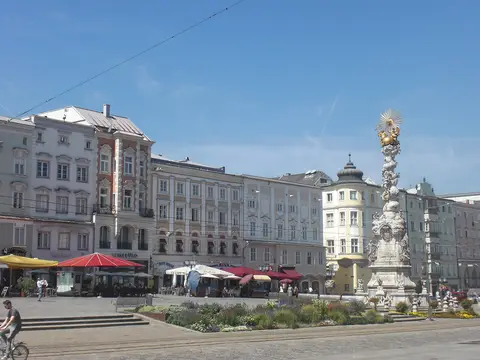
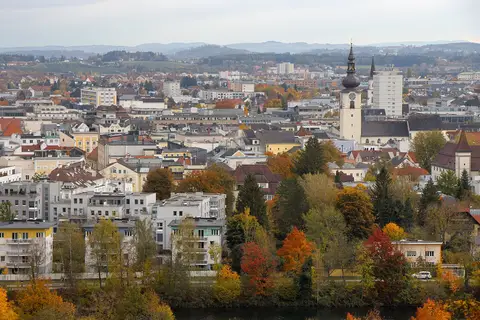
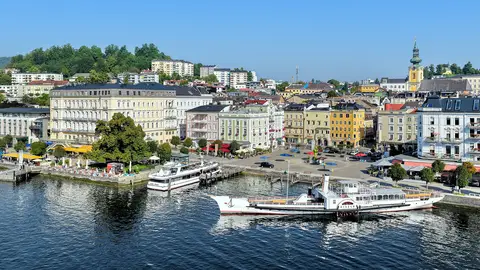
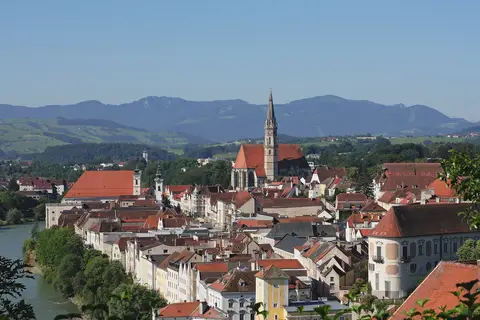
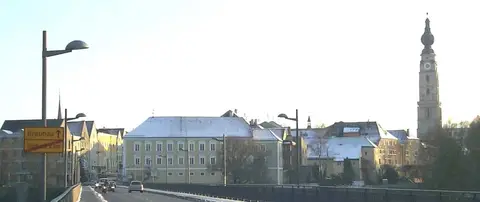
Linz, the provincial capital on the Danube, has transformed itself from a steel town into a city of media art. The Ars Electronica Center glows in changing colors at night, the Lentos art museum sits across the river, and in September the Linzer Klangwolke turns the Donaupark into a stage. The Pöstlingberg, with its pilgrimage church and grotto railway, is reached by one of the steepest adhesion railways in the world. Wels is a trade-fair and shopping city with a pretty old town, and Steyr is an iron town at the confluence of the Enns and Steyr rivers, with late Gothic townhouses. Braunau am Inn has one of the tallest church towers in Austria, and Gmunden is known for its ceramics and for Schloss Ort, a castle on an island in Lake Traunsee.
Other Upper Austria destinations include Freistadt in the Mühlviertel, with its medieval town wall and brewery; Schärding on the Inn, with its colorful townhouses; Mondsee, with the basilica from the film "The Sound of Music"; and Lake Attersee, where Gustav Klimt spent his summers. Steyr holds a Christkindl market in Advent, and Gmunden draws visitors with its lakeside promenade and the Traunstein.
Sights in Upper Austria
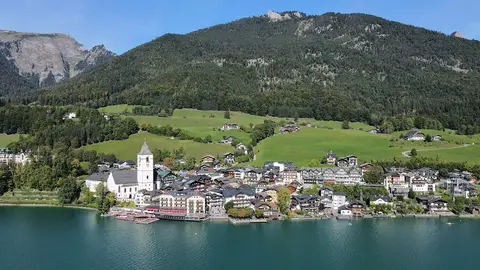
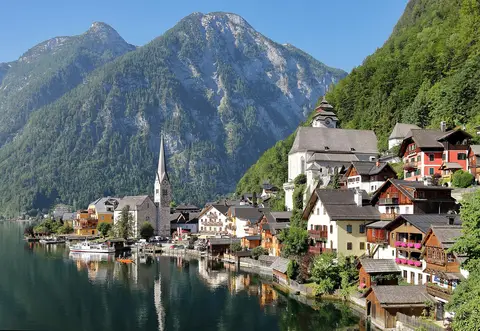
Hallstatt, with its houses built into the mountainside, is one of the most photographed villages in the world and part of the Hallstatt-Dachstein/Salzkammergut UNESCO World Heritage Site; the salt mine above the village is considered the oldest in the world, and the Iron Age Hallstatt culture was named after the place. Other sights in Upper Austria include St. Wolfgang im Salzkammergut, with Michael Pacher's winged altarpiece and the White Horse Inn, the Kaiservilla in Bad Ischl, the summer residence of Emperor Franz Joseph, the Dachstein Giant Ice Cave and the 5fingers viewing platform on the Krippenstein. The abbeys of St. Florian, Kremsmünster and Schlägl are Baroque monastery complexes, and the Mauthausen Memorial commemorates the largest concentration camp on Austrian soil.
Families visit the Grünau Animal Park in the Almtal, while hikers climb the Traunstein above Lake Traunsee or the Schafberg, which a cog railway climbs from St. Wolfgang. In the Mühlviertel, you'll find Clam Castle, the Böhmerwaldsteig trail and the Pelmberg open-air museum; along the Danube, the Schlögen Loop and Engelhartszell, home to Austria's only Trappist monastery, which makes liqueur and beer.
Food and Drink
The Linzer Torte, a shortcrust tart with red currant jam and a lattice top, is considered one of the oldest cakes in the world. Upper Austria is also dumpling country: bacon dumplings, cracklings dumplings and Mühlviertel potato dumplings served with roast pork. Cider made from apples and pears is poured in traditional cider taverns, and in Bad Ischl, Zauner has been selling Zaunerstollen since the 19th century. In the Innviertel, many small breweries are at work.
Culture and Festivals
In 2024, Bad Ischl and the Salzkammergut were European Capital of Culture. The Lehár Festival in Bad Ischl, the Bruckner Days in St. Florian, where Anton Bruckner is buried beneath the organ, and customs such as the Glöckler run in Ebensee on Epiphany Eve are part of the yearly calendar.
Getting There and Best Time to Visit
Linz lies on the Western Railway between Salzburg and Vienna and can be reached from either city in just over an hour; Linz Airport has a few scheduled connections. To get to the Salzkammergut, you travel via Attnang-Puchheim to Gmunden, Bad Ischl and Hallstatt. The best time to visit is May through October; in Advent, the markets in the Wolfgangsee towns and in Steyr, the "Christkindl" town with its own post office, are especially atmospheric.