Saxony-Anhalt: The Harz, Luther, and Bauhaus
Travel guide · editorialHardly any German state has as many World Heritage sites per capita: Luther sites, Bauhaus, garden kingdom, cathedrals, and half-timbered towns. A vacation in Saxony-Anhalt takes you from Quedlinburg up the Brocken, along the Romanesque Road, and to the vineyards on the Saale and Unstrut rivers.
Location and Landscape
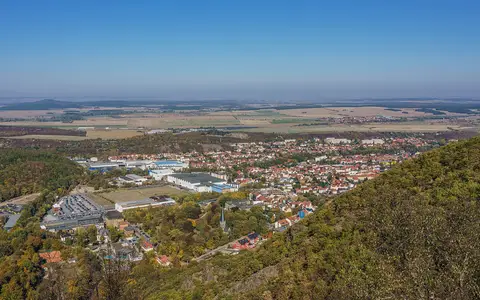
Saxony-Anhalt lies in the middle of eastern Germany. In the west the Harz Mountains rise up, with the Brocken as the highest peak in northern Germany and the Bode Valley, a deep granite gorge. The Elbe flows through the state from southeast to north, lined by the floodplain forests of the Middle Elbe Biosphere Reserve. To the north lies the Altmark with Hanseatic towns like Tangermünde and Stendal; to the south is the Saale-Unstrut Valley, home to Germany's northernmost quality wine region. Around Halle and Bitterfeld, lignite was mined for a long time; today lakes such as the Goitzsche Lake are taking shape there.
Magdeburg and Halle
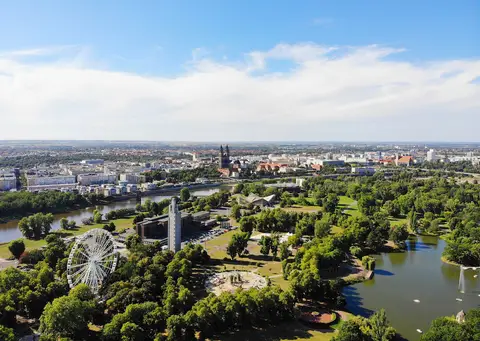
Magdeburg, the state capital, lies on the Elbe. Otto the Great made it a center of the empire in the 10th century and is buried in the cathedral, the first Gothic cathedral on German soil. The Green Citadel, the last work by Friedensreich Hundertwasser, the Magdeburg Water Bridge, where the Mittelland Canal crosses the Elbe on an aqueduct, and the Elbauenpark are modern highlights. Halle (Saale) is, along with Magdeburg, the largest city in the state, the birthplace of George Frideric Handel, and home to the Francke Foundations. The State Museum of Prehistory houses the Nebra Sky Disc, the oldest known concrete depiction of the cosmos, around 3,600 years old.
Sights in Saxony-Anhalt
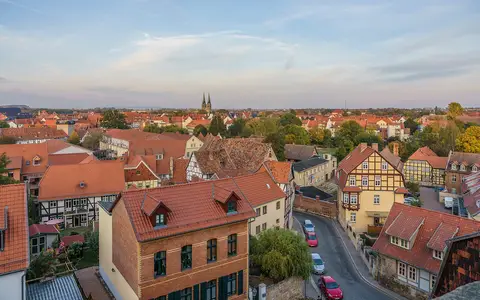
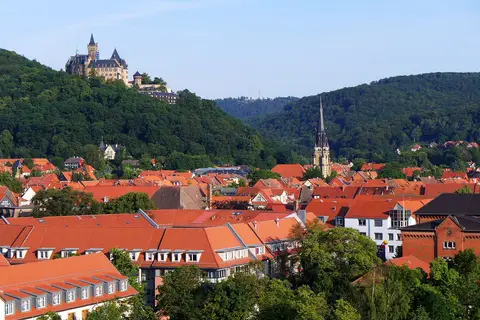
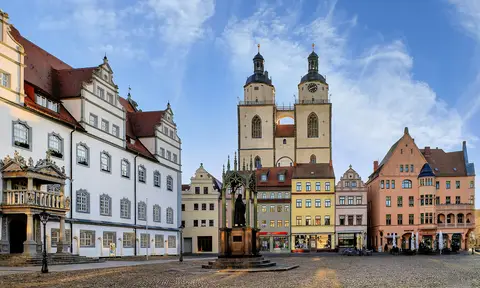
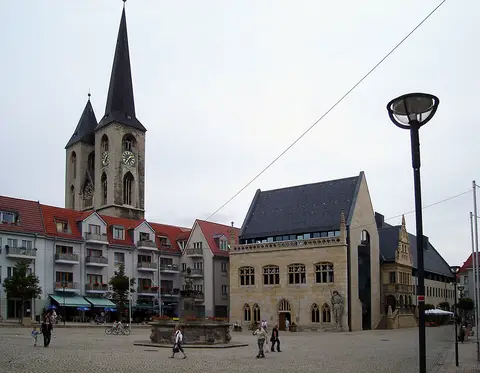
Quedlinburg, with more than 2,000 half-timbered houses, the collegiate church, and the cathedral treasury, is a World Heritage site and one of the most impressive old towns in Germany. Wernigerode, with its colorful town hall and the castle above the town, is the starting point of the Brocken Railway, a narrow-gauge steam railway to the summit. In Thale the Bode Valley begins; a cable car and chairlift lead to the Hexentanzplatz (Witches' Dance Floor) and the Rosstrappe. Wittenberg, officially Lutherstadt Wittenberg, is where Luther published his theses in 1517; the Castle Church, Luther House, and Town Church are World Heritage sites. In Eisleben, where he was born and died, you can visit the house of his birth and the house of his death.
Dessau, Naumburg, and the Romanesque Era
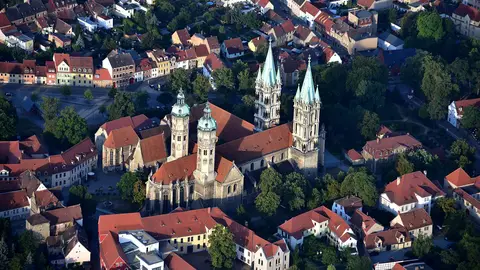
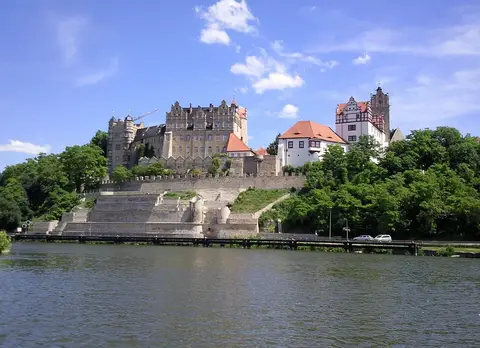
In Dessau, today Dessau-Roßlau, stands Walter Gropius's Bauhaus building with the Masters' Houses, plus the Bauhaus Museum. Around the city stretches the Dessau-Wörlitz Garden Kingdom, one of the first English-style landscape gardens on the continent. Naumburg (Saale) has a cathedral whose donor figures, including the graceful Uta, rank among the most significant sculptures of the Middle Ages; it is a World Heritage site. The Romanesque Road links more than 80 buildings, including Memleben Abbey, Querfurt Castle, and the Ark Nebra at the site where the Sky Disc was found. Other Saxony-Anhalt destinations include Stolberg in the Harz, Freyburg with the Rotkäppchen sparkling wine cellars, and Halberstadt, where an organ piece by John Cage is being played in the Burchardi Church until 2640. In the Harz, the Rappbode Dam is also worth a visit, with one of the longest pedestrian suspension bridges in the world and a long zip line. Tangermünde in the Altmark has medieval brick buildings on the Elbe, and Stendal has St. Nicholas Cathedral. Halle has the Moritzburg, an art museum in a late Gothic castle, and the Saale, a river overlooked by Giebichenstein Castle perched above the water. The Convent of Our Lady in Magdeburg houses an art museum, and the Garden Kingdom is wonderful to explore by bike.
Food and Drink
The cuisine is hearty: Harzer cheese, a tangy sour milk cheese; Halberstädter sausages, said to be the world's first canned sausages; Bötel with Lehm und Stroh ("clay and straw"), meaning pork knuckle with pea purée and sauerkraut; and Baumkuchen from Salzwedel. On the Saale and Unstrut, Müller-Thurgau, Silvaner, and Weißburgunder grapes grow, and many winemakers pour their wines at seasonal wine taverns. Rotkäppchen sparkling wine from Freyburg is the best-selling sparkling wine brand in Germany. In the Harz, herbal liqueur and game dishes are part of the experience.
Getting There and Best Time to Visit
Leipzig/Halle Airport lies on the border with Saxony. Magdeburg, Halle, and Wittenberg are connected by ICE high-speed rail lines, and the Harz narrow-gauge railways open up the Harz. The best time to visit is from May to October; in fall, the grape harvest takes place on the Unstrut. On Walpurgis Night, April 30, Harz towns celebrate with witch costumes, and during Advent, Christmas markets in Quedlinburg draw visitors with their Advent courtyards.