
Rhineland-Palatinate: Castles, Wine and River Valleys
Travel guide · editorialHardly any other German state packs so many castles, vineyards and Roman monuments into such a small area. A vacation in Rhineland-Palatinate takes you through the Middle Rhine Valley with the Loreley, along the loops of the Moselle, to the oldest city in Germany and onto hiking trails through the Eifel and the Palatinate Forest.
Rivers, Forests and Vineyards
Rhineland-Palatinate was created in 1946 from parts of Bavaria, Hesse and Prussia and is a land of river valleys. The Rhine forms its eastern border, and between Bingen and Koblenz it has cut deep into the slate mountains; the Upper Middle Rhine Valley is a UNESCO World Heritage Site. The Moselle winds in tight loops from Trier to Koblenz, lined with steep vineyards. The Nahe, Lahn and Ahr rivers add to the mix. In the northwest lies the Volcanic Eifel with its round maar lakes, and in the south the Palatinate Forest, one of the largest contiguous forests in Germany, which together with the Northern Vosges forms a biosphere reserve. The German Wine Route runs along its eastern edge.
Mainz, Koblenz and Trier
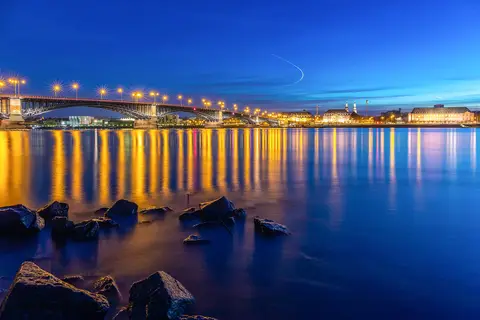
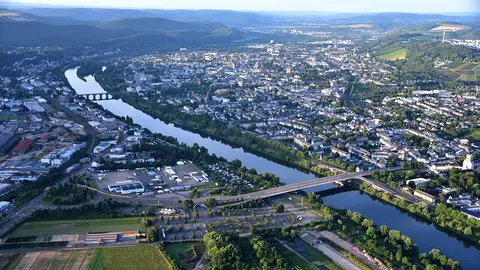
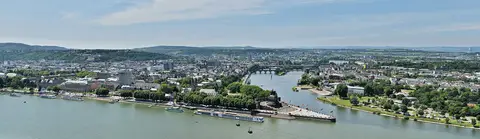
Mainz, the state capital, was the seat of the most powerful archbishops of the Holy Roman Empire in the Middle Ages. Highlights include the Romanesque cathedral, the Gutenberg Museum, which honors the inventor of movable-type printing, and the Chagall windows in St. Stephan's Church. Mainz Carnival is one of the biggest carnival celebrations in Germany. Koblenz lies at the Deutsches Eck (German Corner), where the Moselle flows into the Rhine and an equestrian statue of Wilhelm I stands. A cable car crosses the Rhine to Ehrenbreitstein Fortress. Trier is considered the oldest city in Germany, founded as Augusta Treverorum; the Porta Nigra, the Imperial Baths, the amphitheater, the Basilica of Constantine and the cathedral together form a World Heritage ensemble. Karl Marx was born here, and his birthplace is now a museum.
Sights in Rhineland-Palatinate
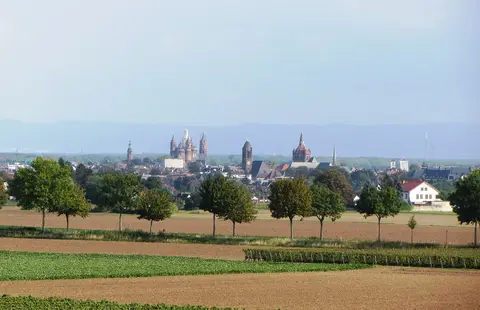
In the Middle Rhine Valley, castles line up one after another, including Marksburg, which was never destroyed, Rheinfels Castle near St. Goar and Pfalzgrafenstein Castle on an island in the river. The Loreley rock above a tight bend in the Rhine is famous thanks to Heinrich Heine's poem. Köln-Düsseldorfer ships sail between Rüdesheim and Koblenz. On the Moselle you'll find Cochem, with its Imperial Castle above the rooftops, and Bernkastel-Kues, with a market square lined with half-timbered houses; Eltz Castle in a side valley is one of the most photographed spots in Germany. In the Palatinate you'll find Speyer Cathedral, a World Heritage Site and the largest surviving Romanesque church in the world, and Hambach Castle, the cradle of German democracy. The Palatinate stretch of the Wine Route, with towns like Deidesheim, Neustadt and Bad Dürkheim, home to the enormous Dürkheim Giant Barrel, is also among the most popular destinations. The Palatinate Forest is dotted with castles such as Trifels, where Richard the Lionheart was once held prisoner, and bizarre sandstone cliffs that attract climbers.
Cities in the South and Along the Nahe
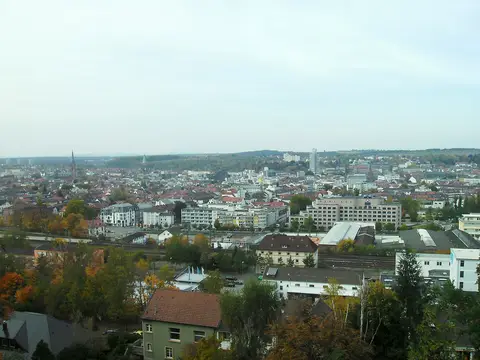
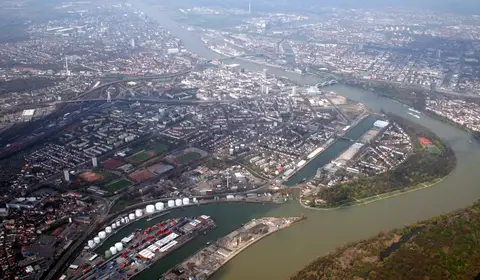
Ludwigshafen am Rhein is an industrial city shaped by the chemical giant BASF, located across the river from Mannheim; Helmut Kohl came from here. Kaiserslautern is home to the FCK soccer club and is a university town on the edge of the Palatinate Forest. Bad Kreuznach on the Nahe is a spa town with salt works and the bridge houses on the Old Nahe Bridge. Other Rhineland-Palatinate destinations include Idar-Oberstein with its gemstone cutting workshops and a church built into a cliff, the Ahr Valley with its red wine villages recovering from the 2021 flood, and the Nürburgring in the Eifel.
Food and Drink
Rhineland-Palatinate is Germany's largest wine-growing state, with six wine regions. Riesling from the Moselle and Middle Rhine, Spätburgunder (Pinot Noir) from the Ahr and the diverse wines of Rheinhessen and the Palatinate are enjoyed in rustic wine taverns and at wine festivals, such as the Dürkheim Wurstmarkt. In the Palatinate, locals eat Saumagen (stuffed pig's stomach), liver dumplings and Dampfnudeln (steamed yeast dumplings), accompanied by Schorle (spritzer) served in a Dubbeglas, the region's traditional wine glass. The Eifel is known for Döppekuchen, a potato casserole, and in Rheinhessen Spundekäs is a popular cheese spread.
Getting There and Best Time to Visit
Frankfurt-Hahn Airport mainly serves budget airlines, while Frankfurt am Main is close to Mainz. ICE high-speed trains stop in Mainz and Koblenz, and regional trains run on both sides of the Rhine and along the Moselle. Hikers can choose from long-distance trails such as the Rheinsteig, the Moselsteig and the Eifelsteig. The best time to visit is from May to October, with autumn especially beautiful during the grape harvest. In summer, the castles and fireworks light up the river during Rhine in Flames.