Mecklenburg-Western Pomerania: Baltic Seaside Resorts and the Lake District
Travel guide · editorialAlmost 2,000 kilometers of Baltic coastline, the chalk cliffs of Rügen, white resort architecture, and more than 2,000 lakes make this sparsely populated state in the northeast one of Germany's most popular vacation destinations. A trip to Mecklenburg-Western Pomerania combines beach days on Usedom with Hanseatic cities, palaces, and canoe trips across the Lake District.
Coast, Lagoons, and Lakes
The state consists of two historic parts: Mecklenburg in the west and Western Pomerania in the east. The coastline is shaped by bodden (shallow lagoons), peninsulas, and islands. Rügen is Germany's largest island, Usedom is shared with Poland, and the Fischland-Darß-Zingst peninsula is part of the Western Pomerania Lagoon Area National Park, where tens of thousands of cranes stop to rest in the fall. Inland lies the Mecklenburg Lake District with Lake Müritz, the largest lake lying entirely within Germany. Müritz National Park and the beech forests of Serrahn are World Heritage sites. Tree-lined avenues, manor houses, and brick churches define the villages.
Hanseatic Cities: Rostock, Wismar, Stralsund, and Greifswald
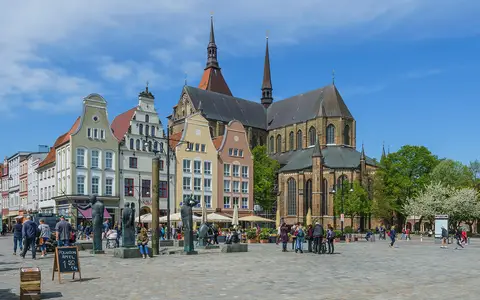
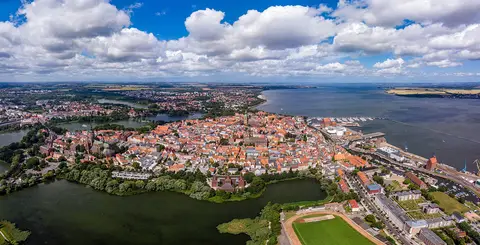
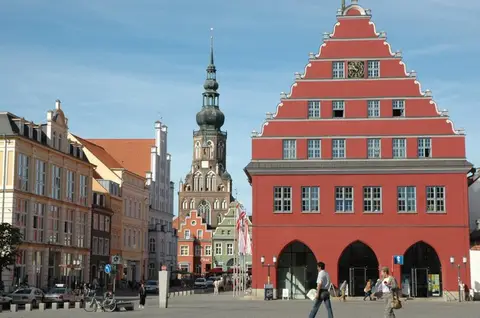
Rostock is the state's largest city, home to one of the oldest universities in Northern Europe, St. Mary's Church with its astronomical clock, and the city harbor. The seaside resort of Warnemünde, a district of the city, is a cruise port with a lighthouse and the Teepott. The Hanse Sail takes place every August. Wismar and Stralsund are jointly a World Heritage site, and their old towns showcase Brick Gothic architecture in its purest form. In Stralsund, the Ozeaneum draws visitors with aquariums of the North Sea and Baltic Sea, and the Rügen Bridge leads out to the island. Greifswald is a university town and the birthplace of the painter Caspar David Friedrich, whose painting of the ruins of Eldena Abbey is famous; in 2024 the city celebrated his 250th birthday.
Sights in Mecklenburg-Western Pomerania: Resorts and Islands
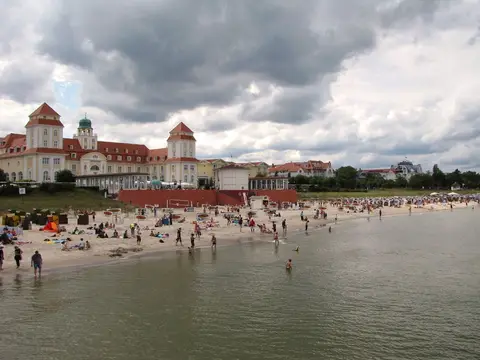
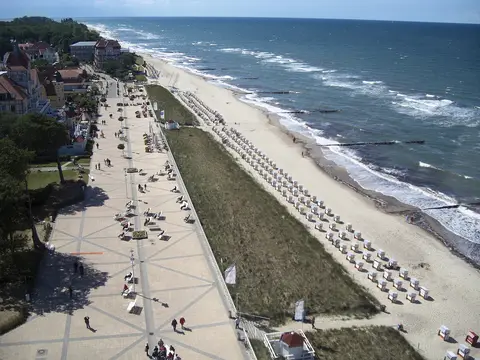
On Rügen you'll find the chalk cliffs of Jasmund National Park with the Königsstuhl (King's Chair), which you reach via a suspended skywalk. Binz is the island's largest seaside resort, with white villas, a pier, and the colossal Prora complex, several kilometers long, a Nazi-era building that now partly houses vacation apartments. Cape Arkona, car-free Hiddensee, and the Rasender Roland, a narrow-gauge steam railway, are other Rügen highlights. On Usedom, Ahlbeck, Bansin, and Heringsdorf form the Imperial Spas with their resort architecture and the longest beach promenade in Europe, which runs all the way to Świnoujście in Poland. In the west, Kühlungsborn with its villas and the Baltic Sea Cycle Route is a popular destination, and next door lies Heiligendamm, Germany's oldest seaside resort, founded in 1793.
Schwerin and the Interior
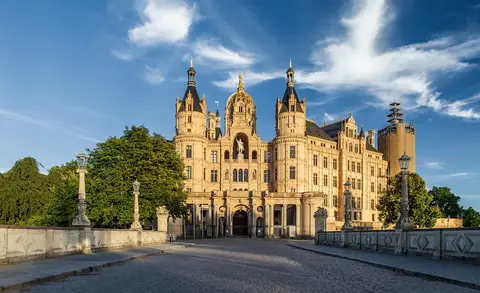
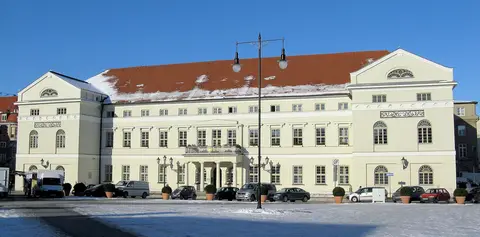
Schwerin, the state capital, sits among lakes; its fairy-tale palace on an island is the seat of the state parliament and has been part of the UNESCO World Heritage since 2024. The old town with its cathedral and half-timbered houses is compact. In the Lake District, Waren on Lake Müritz, Malchow, and Neustrelitz are starting points for houseboat and canoe trips. Ludwigslust Palace, Barlach's studio in Güstrow, and the town walls of Neubrandenburg round out the cultural destinations in Mecklenburg-Western Pomerania. In Güstrow the Renaissance palace is also worth a visit, and in Neubrandenburg a stroll along the Wiekhäuser, the small houses built into the town wall.
Food and Drink
On the coast, you'll eat fish sandwiches with herring or Bismarck herring, oven-smoked fish, and sea buckthorn products ranging from juice to liqueur. Mecklenburg roast pork ribs with apples and plums, potato pancakes, and solyanka, a holdover from East German days, appear on many menus. The region produces rapeseed oil, honey, and game, and in late summer the fields glow blue with lupines. Rostocker Pils and Störtebeker from Stralsund are the well-known beers. Outside the season the coast is quiet; then beach walks, amber hunting after storms, and wellness hotels are on the agenda, and the piers lie almost deserted in the fog. On the Lake District, houseboats that require no boating license are a popular way to see the region from the water.
Getting There and Best Time to Visit
Rostock-Laage Airport has only a few connections, so most people arrive via Berlin or Hamburg. Trains run to Rostock, Stralsund, Binz, and Schwerin, and the Usedomer Bäderbahn connects the island's resort towns. You can explore the coast by bike on the Baltic Sea Cycle Route. The best time to visit is from June to September; the Baltic is warmest in July and August, but also at its most crowded. Rapeseed blooms in May, the cranes migrate in October, and many hotels offer low shoulder-season rates.