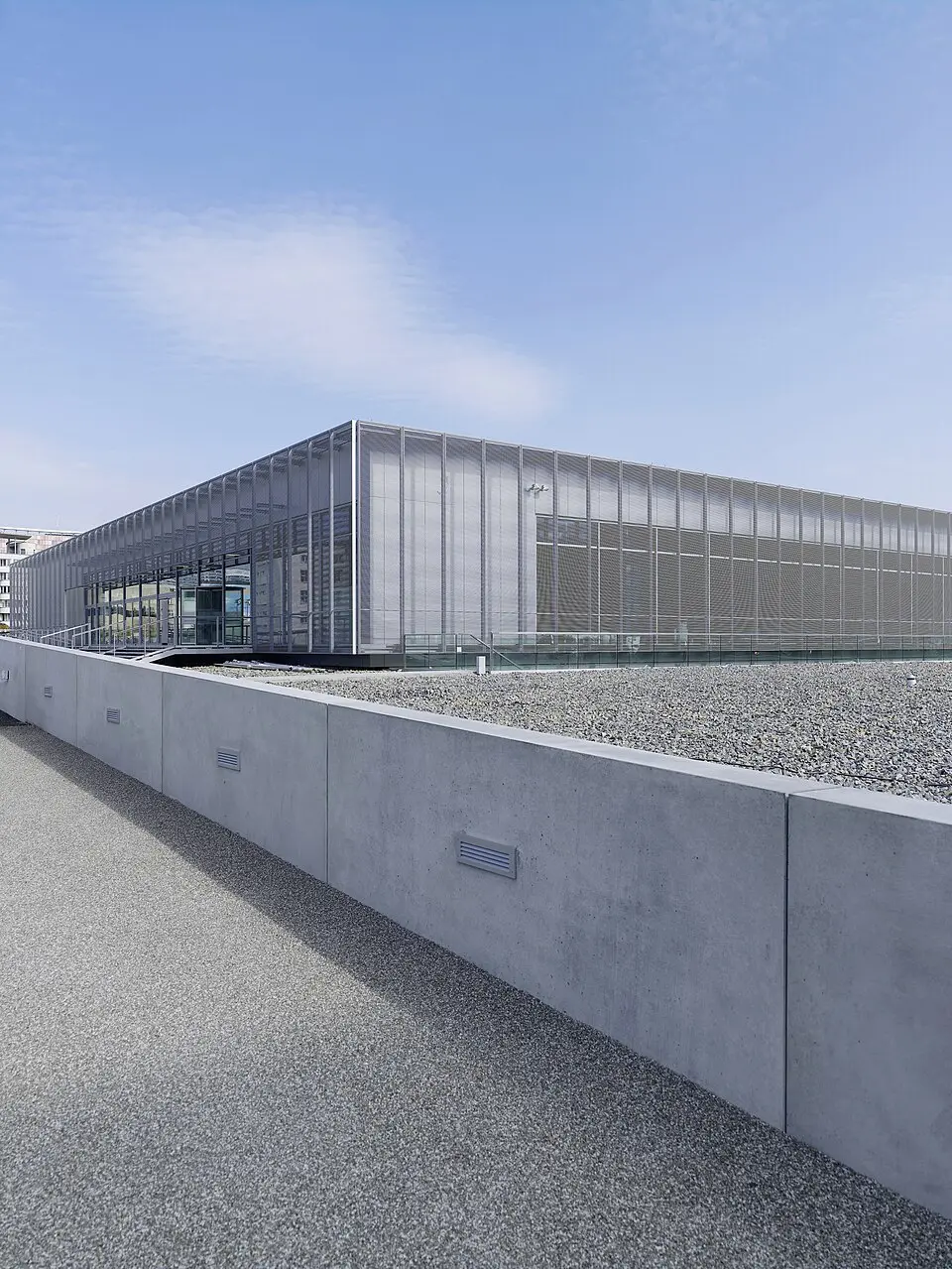
About Topography of Terror
The Topography of Terror is a central site of historical reckoning in Berlin, dedicated to documenting Nazi terror. The project, which has existed since 1987, includes a documentation center with a permanent exhibition, rotating special exhibitions, and an extensive outdoor installation. The institution is run by the Topography of Terror Foundation, established in 1992 and jointly supported by the State of Berlin and the Federal Republic of Germany. Although the site is counted among the capital's museums, its operators deliberately see it as neither a conventional museum nor a memorial in the narrow sense. Instead, the aim is to create a space that encourages visitors to seek information and engage critically with the crimes of the Nazi state.
The site is located in Berlin's Kreuzberg district, in a very central position. It lies between the former Anhalter Bahnhof station, Potsdamer Platz, and the historic city center, and the Brandenburg Gate is only about one kilometer to the north. The area is bounded by Niederkirchnerstrasse to the north and Wilhelmstrasse to the east. A distinctive feature of the location is a 200-meter-long remnant of the Berlin Wall that marks the property line along Niederkirchnerstrasse. Directly below this stretch of wall lies the so-called exhibition trench, where another part of the permanent exhibition is presented.
The name of the site was chosen with purpose. The word topography literally means a description of a place, referring to the historical concentration of the most important institutions of the Nazi persecution and terror apparatus at this very spot. At what was then Prinz-Albrecht-Strasse 8, now Niederkirchnerstrasse 8, stood the headquarters of the Secret State Police, or Gestapo. The neighboring Hotel Prinz Albrecht served from 1934 as the seat of Heinrich Himmler, the Reichsführer SS. In addition, the Prinz-Albrecht-Palais on Wilhelmstrasse was the headquarters of the SS Security Service from 1934 and, from 1939, of the Reich Security Main Office as well. This dense concentration of the centers of power behind the terror left a lasting mark on the history of the site.
After World War II, the heavily damaged buildings were demolished in the 1950s. The area was subsequently used for other purposes; among other things, it served for fifteen years as a driving practice ground and as a dumping site for rubble from the redevelopment of the Kreuzberg area. The idea of building a memorial here dates back to 1978, when the architecture critic Dieter Hoffmann-Axthelm pointed out the historical significance of the site. The first exhibition was created for Berlin's 750th anniversary celebrations in 1987 and was continued afterward. This initiative led to the call for a documentation center that would carry on the research and documentation of Nazi terror.
The construction of today's documentation center had a long and turbulent history. In 1993, the Swiss architect Peter Zumthor won the competition for the museum complex. His design called for a building in the style of a barracks, with a concrete-beam structure and glazed gaps to let in plenty of light. Realizing this architectural work of art, however, proved far more expensive than expected. Additional technical costs, the insolvency of the contracted construction firm, and political differences between the federal government and the state led to years of delays. In 2004, the State of Berlin finally parted ways with Zumthor amid a dispute, and the stair towers of the unfinished project that had already been built were demolished.
A new architectural competition was announced in 2005. In January 2006, the architect Ursula Wilms and the landscape architect Heinz W. Hallmann won the competition. Their design called for a two-story, rectangular glass building with 3,500 square meters of floor space across a ground floor and a basement level. Construction began on November 2, 2007, and completion was planned for the 65th anniversary of the end of the war. On May 6, 2010, the documentation center was officially opened by then Federal President Horst Köhler. The following day, visitors could see the permanent exhibition, and the entire grounds were made fully accessible again with the site tour.
The building itself is distinguished by a metal slat facade that leaves the view of the surroundings open. The main exhibition space on the ground floor covers 800 square meters and is devoted to the development and workings of the security apparatus under the Nazi regime. At the back of the building is a conference or event room with space for 199 participants. The basement houses seminar rooms, a library with a collection of 25,000 volumes, and offices for the foundation's staff. There is also room for about two school classes, which underscores the educational function of the site.
The permanent exhibition in the documentation center is titled "Topography of Terror. Gestapo, SS and Reich Security Main Office on Wilhelmstrasse and Prinz-Albrecht-Strasse." It is presented in German and English and is the centerpiece of the site. It focuses on the central institutions of the SS and police in the "Third Reich" and the crimes they committed across Europe. Alongside its portrayal of the system of terror, the exhibition gives considerable attention to the many victim groups of the Nazi regime, in order to make the scale of the suffering and persecution tangible.
In addition to the indoor exhibition, there is another permanent exhibition outdoors, shown in the exhibition trench along the excavated remains of the cellar walls and the Berlin Wall, which is a protected monument. This display is titled "Berlin 1933–1945. Between Propaganda and Terror" and addresses Berlin's historical role as the capital of the "Third Reich." The trench has a glass roof, which shields visitors from the weather while they view the historical foundations. In the southern part of the grounds there is also a grove of black locust trees, a remnant of the former driving practice ground from the 1970s, while the rest of the open space is covered with railway ballast.
An essential part of the visitor experience is the site tour, which largely follows the excavated building remains. The tour has 15 stations where information panels and an audio guide provide an overview of the history of the site. The stations describe how the grounds were used during the Nazi era and the postwar period, as well as the institutions of Nazi terror that were based here. The tour also takes in the protected remains of the Berlin Wall and the historic sidewalk of the former Prinz-Albrecht-Strasse, which runs right along the wall and is partly still preserved.
Besides its permanent exhibitions, the Topography of Terror regularly presents rotating special exhibitions that shed light on different aspects of Nazi history and how it has been confronted. These exhibitions cover topics such as the legal prosecution of Nazi criminals, the history of the People's Court, the role of propaganda photography, and the fate of specific victim groups such as the Sinti and Roma. This variety of topics makes the site a dynamic space of remembrance that takes up current historical debates and encourages visitors to reflect on the past and its effects on the present.
At a glance
- Category
- Museum › History museums
- Rating
- no reviews yet · write a review
- Address
- Niederkirchnerstraße 8
10963 Berlin, Germany - District
- Kreuzberg
- Phone
- +493025450950
- Website
- www.topographie.de
- presse@topographie.de
- Coordinates
- 52.50692° N · 13.38365° E
- Data quality
- confidence 0.99
- Identifier
- ID e47488e8-f19…
Location & surroundings
Toggle layersRatings & comments
none yetNear Topography of Terror
closest 5 per category · 2 kmSights
Restaurants
Museums
Hotels
More:History museums in Berlin (111)Museums in Kreuzberg (49)All museums in Berlin (502)
280 places within 2 km loaded.
Don't miss in Berlin
All sights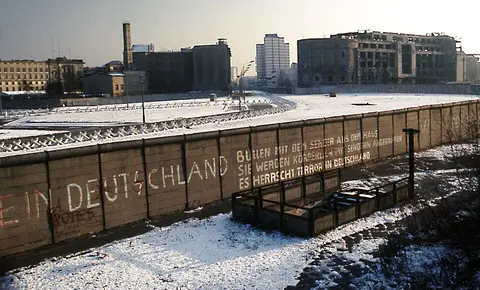 Historic sites01
Die Berliner Mauer
Mühlenstraße 79 · Berlin● Website● Phone Historic sites02
Brandenburger Tor
Pariser Platz · Berlin● Website● Phone Historic sites03
Fernsehturm
Panoramastraße 1 · Berlin● Website● Phone Historic sites04
You need a free account to leave reviews and photos – that keeps comments genuine and lets you edit them later.
Destroyed headquarters of Nazi security and intelligence services found itself on East Berlin side and in 1961 became part of the Berlin Wall. Ruined basement was excavated in 1980s in an ironic twist of fate and now you can see Berlin Wall preserved just above the walls of former oppression central.
Source: Wikivoyage, „Berlin Wall“ · authors per page history · CC BY-SA 4.0 · as of 3/22/2025